

Roughly one in five small businesses does not survive the first year. By year five, half are gone. Even among those that endure, only a third survive beyond a decade.
But reaching a decade doesn’t guarantee security—it only brings the next cliff: succession. Whether it’s a generational transfer in a family business or a founder looking to retire after twenty years in the trenches, more than 60% of those businesses don’t survive the handoff—or never find a buyer at all. The strain of leadership change or the scrutiny of due diligence is often the final stressor that brings everything down.
The demise seldom begins with a dramatic crash. More often it starts quietly: a call from a vendor asking when you’ll pay a past-due invoice. A payroll that arrives before receivables clear. A customer who stops ordering without explanation. Small business failure is rarely a single event—it creeps in as a slow unraveling. By the time the warning signs are undeniable, the foundation is already compromised.
When a business begins to stumble, it doesn’t immediately feel like failure. More often, it feels like fatigue—leading to the belief that all it takes is pushing harder, working longer hours, or landing one more client. Owners convince themselves they can outwork structural problems, mistaking exhaustion for progress.
We expect failure to announce itself clearly, coming as a crisis we can rally against. But that’s not how it happens. Failure accumulates in overlooked details, repeated patterns, and problems pushed aside for another day.
With more than two decades in small business leadership roles, I’ve seen these patterns across industries and ownership structures. They are systemic, reappearing with such consistency that I began calling them the 12 Fatal Issues for Small Business.
Behind every fatal issue are avoidable mistakes—businesses that relied on effort instead of structure, founders who believed grit alone would be enough. Many built operations that could not function without them, concealing weaknesses instead of building the systems needed to overcome them.
The 12 Fatal Issues are not theories. They are operational realities, grounded in research, surveys, and lived experience. And they rarely appear in isolation. They compound, intersect, and cascade until the entire enterprise falters.
This isn’t a checklist of minor errors. It’s a framework for recognizing the dangers that undermine survival and succession. Once identified, they can be met with systems that keep them at bay—systems that determine whether a business endures or unravels.
1. Inadequate Capitalization
Inadequate capitalization begins with insufficient funds to cover startup and operational expenses—but it rarely stops there. The problem resurfaces during expansion, when businesses chase growth without the reserves to sustain it. At its core, this issue is about survival: a business fails when it cannot financially endure the early stages of development, unexpected downturns, or sudden shifts in market direction.
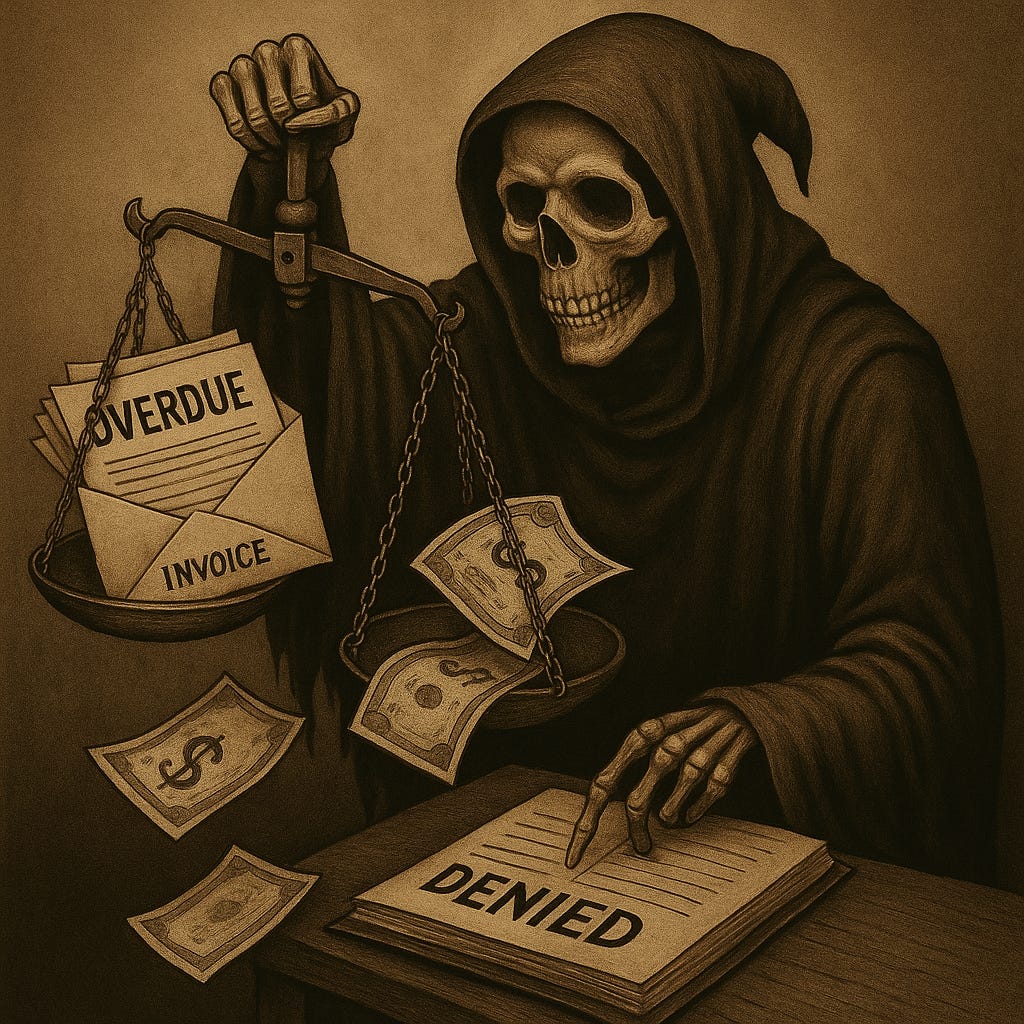
Too often, owners try to patch the gap with mismatched funding—maxing out credit cards or turning to predatory lenders. These moves buy time but drain resilience. They feel like problem-solving in the moment. In reality, they are a slow form of suffocation.
This issue feeds on optimism bias—the human tendency to underestimate costs and overestimate our ability to “figure it out.” Entrepreneurs confuse grit for cash, believing that hustle alone can substitute for funding. It can’t. Hustle might get you through a week. Capital is what gets you through a year.
Why it matters:
32% of former small business owners cited lack of capital as the primary reason for shutting down.[i]
33% of small businesses are one unpaid invoice away from collapse.[ii]
Most businesses burn through startup capital within 12–18 months because they underestimate what survival truly costs.[iii]
2. Poor Cash Flow Management
Poor cash flow management is the inability to balance cash inflows and outflows so that liabilities can be cleared on time. Profit may look strong on paper, but a business doesn’t run on accounting profit or accruals—it runs on cash. Positive cash flow is what buys the time needed to address the other fatal issues and give a business the chance to survive.
When cash flow suffers, the owner’s mindset suffers as well. Scarcity takes hold, creating cognitive overload. Research shows that financial stress can reduce effective IQ by up to 14 points—comparable to losing a full night of sleep. Under pressure, the mind tunnels, fixating on the immediate threat: the next payroll, the rent check. Longer-term consequences fade from view. In that state, borrowing against tomorrow to survive today feels rational. Selling receivables at a steep discount can seem like the right move forward—even when it only accelerates decline.

Companies implode not because sales were weak, but because timing was off. Customers paying in 60 days while suppliers demanded 30. Cash inflows were visible on the horizon, but cash outflows were already past due. The scramble consumes energy, credibility, and judgment. In the end, cash flow failures don’t just drain accounts—they hollow out the owner and break the spirit of everyone involved.
Why it matters:
82% of small businesses fail due to poor cash flow.[iv]
60% of owners report cash flow problems; 89% say those issues negatively impacted their business.[v]
64% face delayed customer payments, averaging 43 days; 45% of small business owners forgo paying themselves to keep doors open.[vi]
3. Weak Financial Controls
Weak financial controls are the failure to track, measure, and manage finances with discipline. It’s not just about making money—it’s about measuring results with accuracy. A recent study shows that most small businesses fail to reconcile accounts monthly, calculate job-level margins, or review costs regularly. Weak controls surface as messy books, outdated spreadsheets, or an owner who says, “I’ll review them later.”
Without proper costing, expense tracking, forecasting, and budgeting, leadership doesn’t just mismanage—it misjudges the reality of the business. Suddenly, the company doesn’t know its real margin on a service—or worse, assumes every job is profitable because the invoice looks good. Work is being delivered, but the actual cost to deliver it is ignored. Profitable customers are mixed in with unprofitable ones, and margins erode quietly quarter after quarter.
That’s how businesses end up taking on jobs that lose money and calling it “growth.” Schedules stay full, but the bottom line bleeds red. Eventually, the truth surfaces in gallows humor: it would have been cheaper to cut the client a check than to take on the work, because deep down everyone knows it was unprofitable.
With weak financial controls, pricing isn’t based on reality. Without a clear understanding of the true cost structure, every price is a gamble. Break-even becomes an assumption, and volume becomes the false hope that it will cover the gap.
Often, avoidance is deliberate. Owners sidestep financial reviews because the ledger feels like a verdict on their competence. They delay, rationalize, or outsource without oversight. Expenses drift without accountability. And when a downturn hits, there is no map to navigate—only panic.
Why it matters:
Inexperienced owners who fail to implement forecasting and budgeting are far more likely to collapse.[vii]
60% of small business owners admit they lack confidence in managing financial systems.[viii]
Only 36% of small businesses that applied for financing were fully approved—often because their financials lacked clarity or credibility.[ix]
4. Compliance Risks
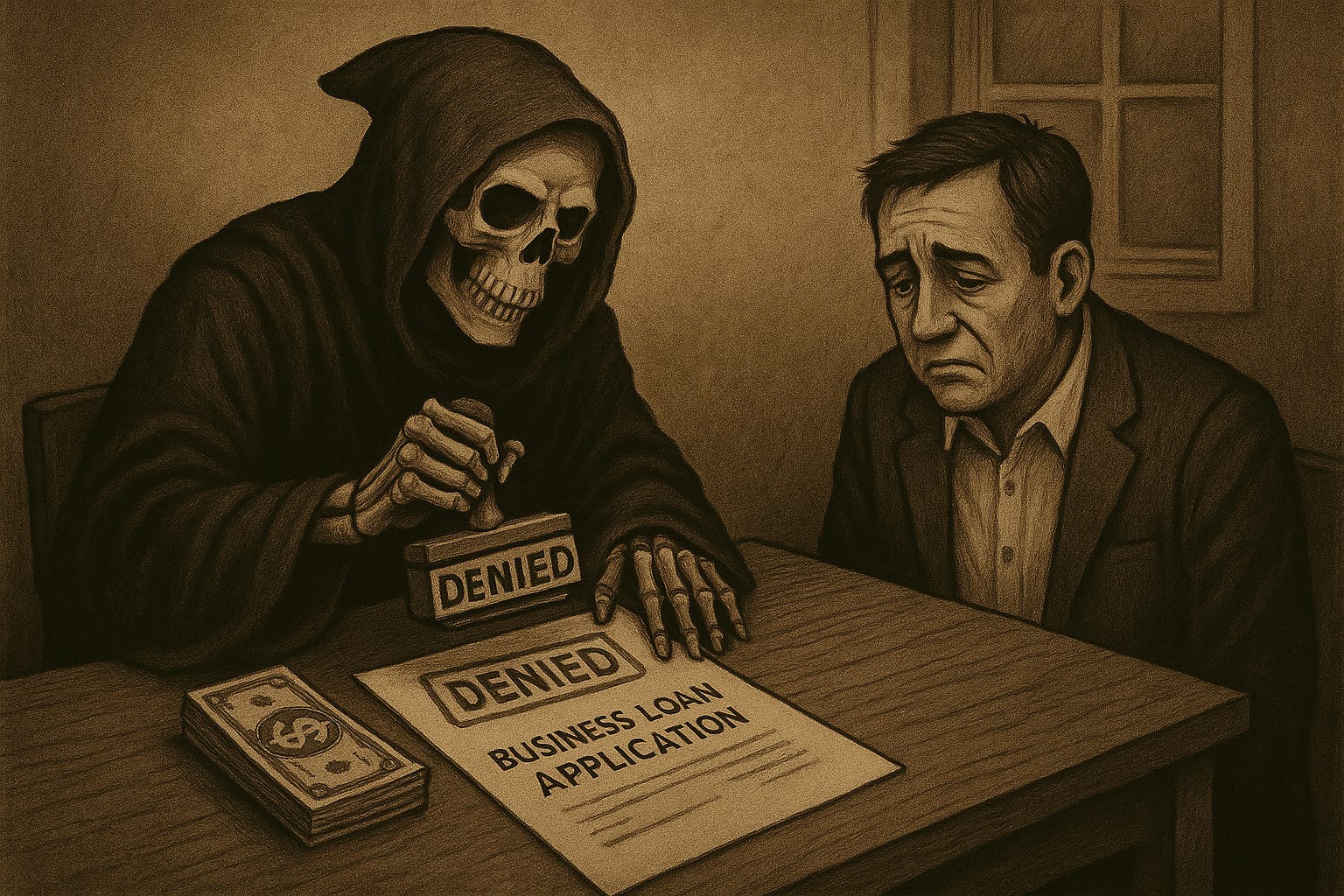
Compliance doesn’t generate revenue, but it does allow the doors to stay open. When compliance slips—when tax filings are delayed, licenses overlooked, or safety standards skipped—the stay of execution is only temporary. Eventually, fines arrive or the sheriff shows up to shut down operations.
Compliance failures stem from ignorance, shame, or outright avoidance. The loan covenant we didn’t keep an eye on during the year, the unopened envelope from the IRS, or the call from the labor board you let go to voicemail. Owners convince themselves they can dodge the situation a little longer and they’ll have time to make it go away. But every detail ignored compounds until the damage is irreversible.
Compliance isn’t glamorous, but it’s non-negotiable. A single violation can undo years of credibility, erode customer trust, and stall an otherwise healthy business.
Why it matters:
30% of small businesses face fines for noncompliance.[x]
Compliance violations reduce consumer trust by 47%.[xi]
63% of small businesses cite compliance as a top operational burden.[xii]
Reflection: The First Domino Run
Capital bleeds into cash flow. Cash flow becomes invisible without strong financial controls. And even if you manage the first three fatal issues, falling out of compliance can bring it all down. This is how businesses collapse in their early years—not from bad ideas, but from financial fragility compounded by compliance avoidance.
Where We Go Next
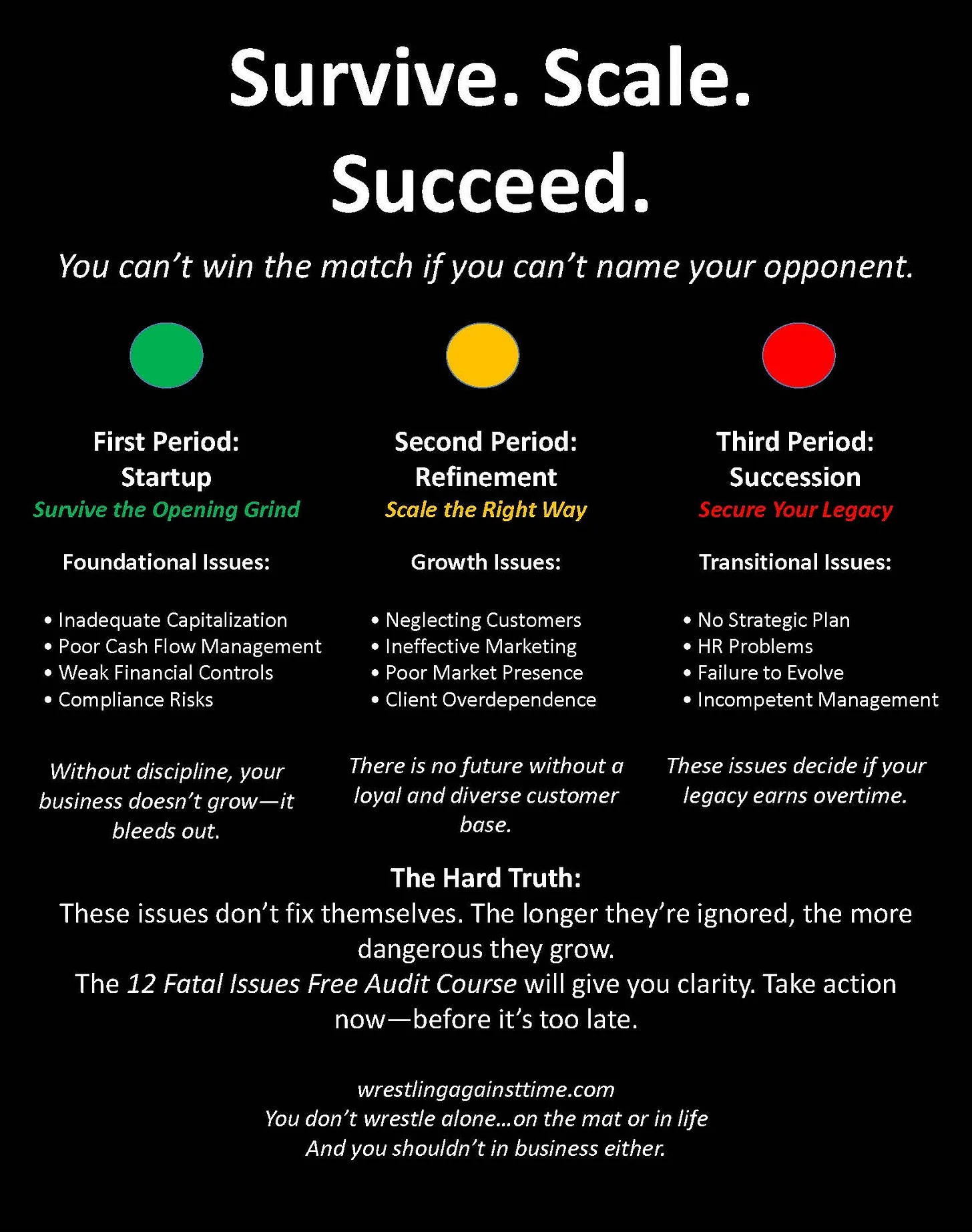
This concludes Part 1 of The Cracks Beneath the Surface. Here we’ve explored the financial and compliance foundations that, if left unchecked, create the first domino run toward failure. In Parts 2 and 3, we’ll turn to the remaining eight fatal issues: Neglecting Customers, Ineffective Marketing, Client Overdependence, Poor Market Presence, No Strategic Planning, HR Problems, Failure to Evolve, and Incompetent Management. Together, these operational and people-centered failures compound with the financial cracks you’ve just read about—and often prove just as fatal.
Endnotes:
[i] The Zebra. (2021). Small business statistics: Challenges and failures.
[ii] BusinessDasher. (2024). Small Business Failure Statistics in 2024: A Closer Look.
[iii] U.S. Small Business Administration. (2023). Calculate your startup costs.
[iv] U.S. Bank. (n.d.). Small business failure statistics.
[v] QuickBooks. (2024). 20 small business financial literacy statistics to know in 2024.
[vi] PYMNTS. (2024). The Small Business Cash Flow Crisis.
[vii] Hunter, M. (2011). Why businesses fail.
[viii] Yaqub, M. (2024). Small business owner confidence survey.
[ix] Federal Reserve Banks, 2022
[x] U.S. Small Business Administration. (2023). Calculate your startup costs.
[xi] Journal of Business Ethics. (2022). Compliance violations and consumer trust.
[xii] NFIB. (2021). Small Business Problems & Priorities survey.